For businesses that rely on commercial refrigeration, maintaining the correct temperature isn’t just about keeping products cold—it’s about protecting inventory, meeting regulatory requirements, and avoiding costly disruptions. Whether you operate a restaurant, grocery store, medical facility, convenience store, or food processing operation, even a brief temperature fluctuation can result in spoiled products, compliance concerns, and unexpected financial losses.
That’s why refrigeration temperature logging has become an essential part of modern facility management. By consistently monitoring and recording refrigeration temperatures, businesses gain valuable insight into equipment performance while creating documentation that supports food safety, quality assurance, and preventative maintenance.
What Is Refrigeration Temperature Logging?
Refrigeration temperature logging is the process of recording the internal temperature of refrigerators, freezers, walk-in coolers, and other refrigerated equipment at regular intervals. While some businesses still rely on manual temperature checks, many commercial facilities now use digital monitoring systems that automatically record temperatures throughout the day.
Automated logging provides continuous monitoring, making it easier to identify temperature fluctuations that may otherwise go unnoticed. Instead of relying on a single reading taken once or twice a day, facilities managers can review complete temperature histories and identify patterns that may indicate developing equipment problems. This information becomes especially valuable when investigating equipment failures or demonstrating compliance with food safety regulations.
Protecting Valuable Inventory
One of the biggest advantages of refrigeration temperature logging is inventory protection. Many commercial products—including food, beverages, pharmaceuticals, and laboratory materials—must remain within specific temperature ranges to maintain quality and safety. Even a short period outside the recommended range can result in product loss.
Continuous monitoring allows businesses to identify problems early, often before products are damaged. If temperatures begin rising unexpectedly, staff can respond quickly to investigate the cause or relocate inventory before significant losses occur.
For businesses storing thousands of dollars’ worth of temperature-sensitive products, early detection can make a substantial financial difference.
Supporting Compliance Requirements
Many industries are required to maintain temperature records as part of food safety programs, health regulations, or internal quality assurance procedures.
Restaurants, healthcare facilities, grocery stores, schools, and food manufacturers often need documented proof that refrigerated products have been stored within acceptable temperature ranges. Accurate temperature logs help demonstrate compliance during inspections while providing confidence that products have been properly maintained. Automated logging systems also reduce the likelihood of incomplete or inaccurate records compared to manual documentation.
Alarm Thresholds Help Prevent Emergencies
Modern refrigeration monitoring systems do much more than record temperatures. Many allow businesses to establish alarm thresholds that trigger alerts whenever equipment operates outside acceptable temperature ranges.
For example, if a walk-in cooler begins warming overnight because of a failing compressor or power interruption, the monitoring system can immediately notify designated personnel through text messages, emails, or mobile app notifications. Receiving an alert within minutes instead of discovering the problem hours later can dramatically reduce product loss while allowing technicians to respond more quickly. These early warnings often prevent minor equipment issues from becoming major operational emergencies.
Temperature Records Make Troubleshooting Easier
When refrigeration equipment begins experiencing intermittent problems, temperature logs provide valuable diagnostic information for service technicians.
Instead of relying solely on customer observations, technicians can review historical temperature data to determine when performance began changing, how frequently fluctuations occur, and whether the issue appears to follow a consistent pattern.
This information often shortens the diagnostic process and helps identify problems involving compressors, thermostats, refrigerant levels, defrost cycles, or control systems. Better information allows repairs to be completed more efficiently while reducing equipment downtime.
Manual vs. Automated Temperature Logging
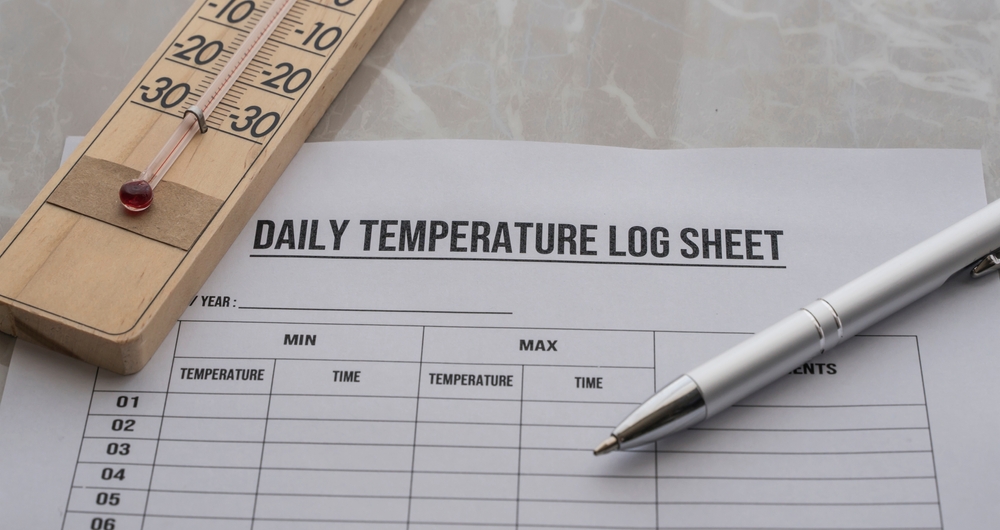
Many smaller businesses still perform manual temperature checks using written logs. While this approach can satisfy certain monitoring requirements, it also has limitations.
Manual logging depends on employees remembering to take readings consistently and accurately. It also provides only a snapshot of equipment performance rather than continuous monitoring throughout the day and night.
Automated temperature logging offers several advantages, including:
- Continuous monitoring 24 hours a day
- Automatic recordkeeping
- Immediate alarm notifications
- More accurate historical data
For facilities that depend heavily on refrigeration, automated systems often provide greater peace of mind while reducing administrative workload.
Pair Temperature Monitoring with Preventative Maintenance
Temperature logging is most effective when combined with a preventative maintenance program. Routine inspections help ensure refrigeration systems continue operating efficiently while allowing technicians to identify worn components before failures occur. During scheduled maintenance visits, technicians can inspect electrical components, verify refrigerant levels, clean condenser coils, test control systems, and confirm that monitoring equipment is functioning properly.
Together, preventative maintenance and temperature logging create a proactive strategy that improves equipment reliability while reducing unexpected downtime.
Protect Your Business with Better Refrigeration Monitoring
Commercial refrigeration failures can be costly, but many problems provide warning signs before equipment stops working completely. Refrigeration temperature logging helps businesses detect developing issues early, protect valuable inventory, simplify compliance, and provide valuable information when troubleshooting system performance.
Silver State Refrigeration, HVAC & Plumbing provides comprehensive commercial refrigeration services, preventative maintenance, and monitoring solutions for businesses throughout Southern Nevada. Whether you need equipment inspections, refrigeration repairs, or help implementing temperature monitoring systems, our experienced technicians can help keep your operation running efficiently. Contact Silver State today to learn more about protecting your commercial refrigeration equipment.